
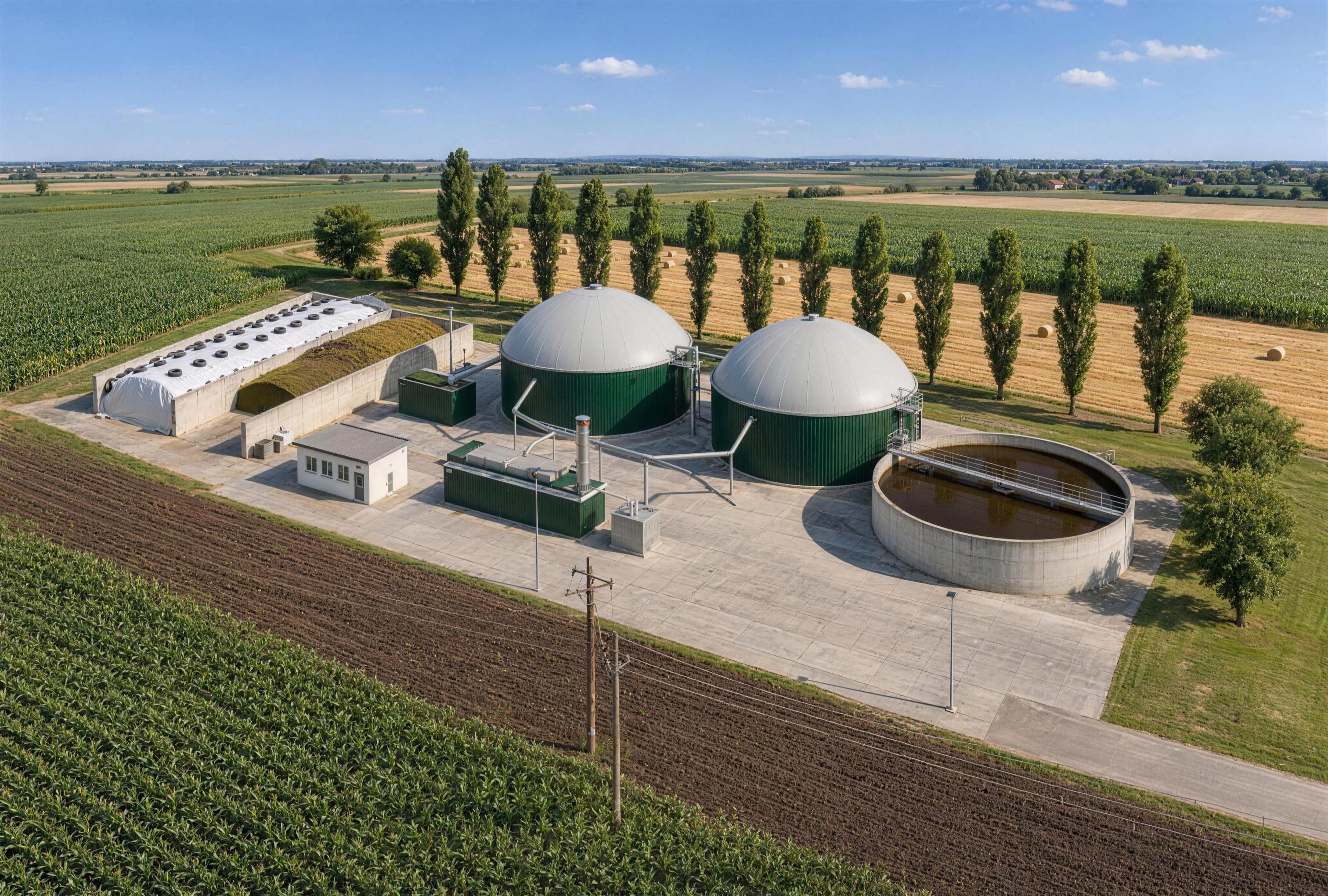
Biogas and biomethane
Renewable gas from manure, biowaste and by-products. It provides electricity, heat, transport fuel and fertiliser, and it is made here, on Croatian farms.
How biogas is made
In a closed tank, the digester, bacteria break down organic matter without oxygen. The process is called anaerobic digestion, and its products are biogas and digestate.
1. Feedstock
Manure, silage, biowaste and by-products are delivered and prepared.
2. Digester
At about 40 °C, over several weeks, biogas forms.
3. Biogas
A mixture of methane and carbon dioxide, with water and trace gases.
4a. Combined heat and power
A gas engine produces electricity and heat.
4b. Biomethane
The upgraded gas goes into the gas grid or becomes bioCNG and bioLNG.
5. Digestate
What remains returns to the fields as fertiliser.
Steps 4a and 4b are two routes for the same biogas.
Feedstock
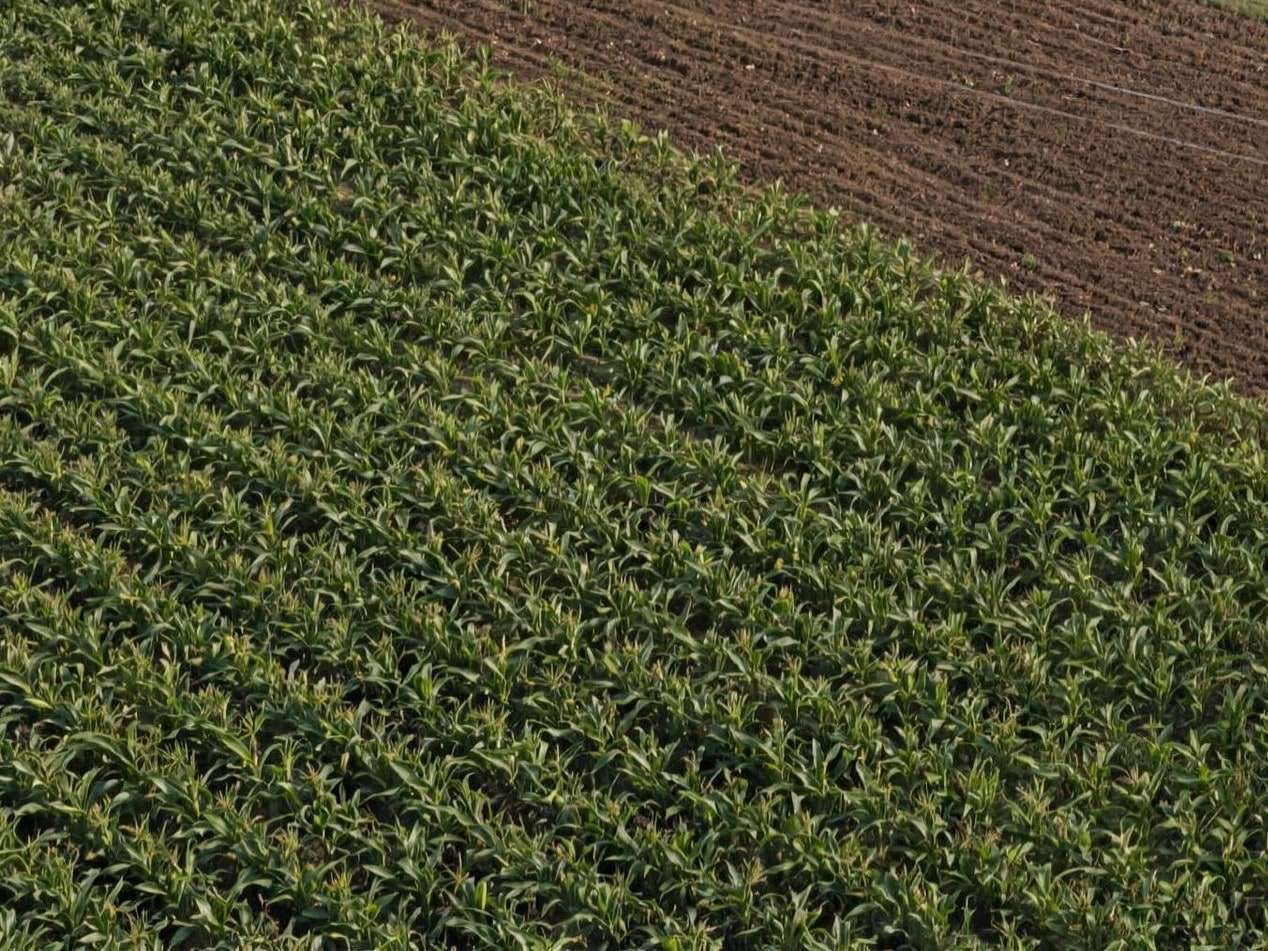
Croatian plants mainly use agricultural feedstock, which is why most of them are in Slavonia and Baranja, next to large farms.
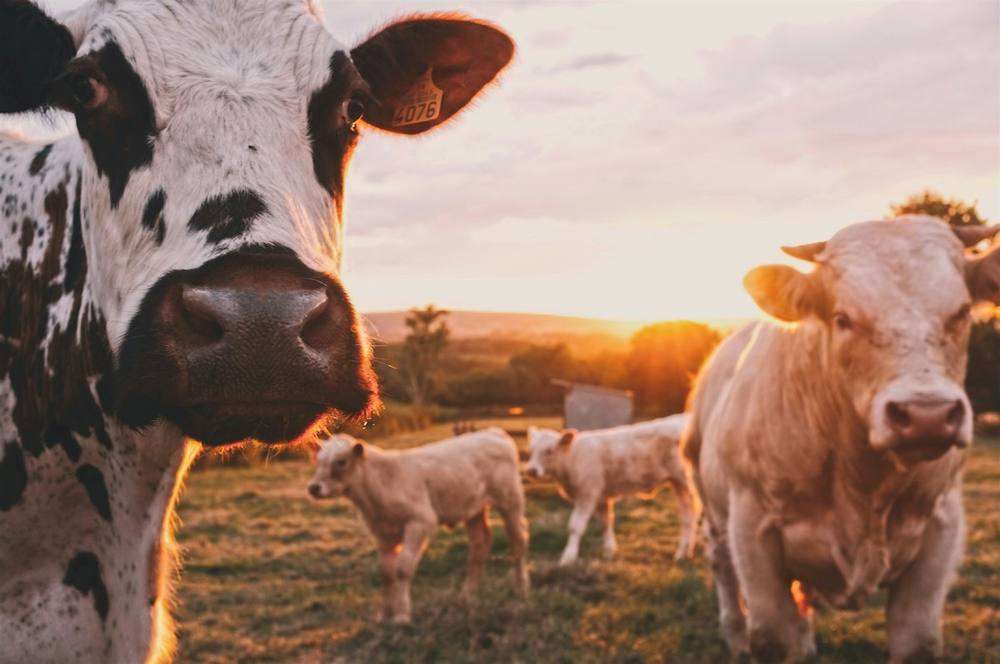
- Manure and slurry
- from cattle, pig and poultry farms
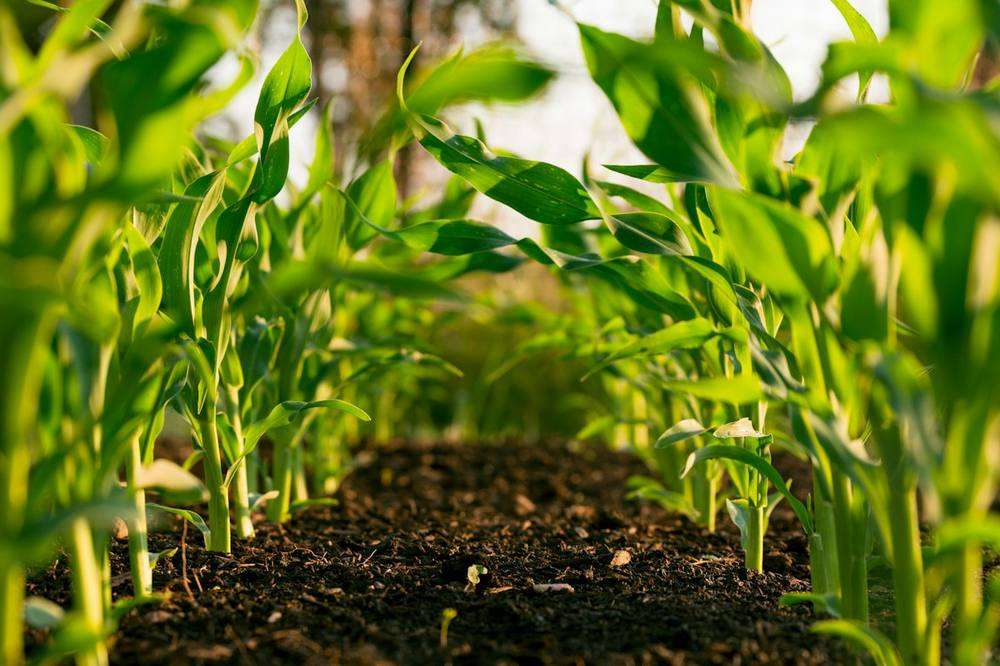
- Silage and catch crops
- maize, sorghum, rye, sugar beet
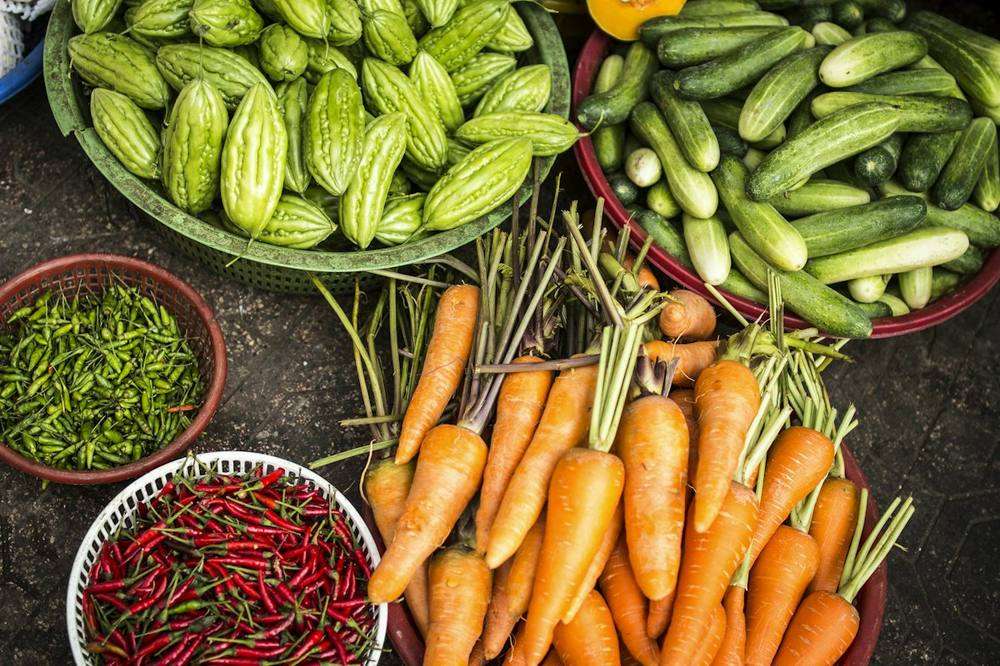
- Biowaste
- from households, kitchens, canteens and markets
- Food industry by-products
- slaughterhouses, dairies, fruit and vegetable processing, sugar factories
- Sludge
- from biological wastewater treatment
Environmental benefits
Less methane from manure
Manure is treated in a closed system instead of releasing methane into the atmosphere from open lagoons.
Replacing fossil gas
Biomethane has the same quality as natural gas and uses the existing gas grid.
Steady renewable energy
Plants run day and night, whatever the sun and wind are doing.
Fertiliser instead of waste
Digestate returns nutrients to the soil and reduces the need for mineral fertilisers.
Production in figures
| Year | Biogas used (million m³) | Plants |
|---|---|---|
| 2017 | 105.0 | 19 plants |
| 2018 | 130.0 | 26 plants |
| 2019 | 145.2 | 29 plants |
| 2020 | 150.2 | 31 plants |
| 2021 | 171.7 | 36 plants |
From biogas to biomethane
The same plants, the same digesters and the same feedstock can produce biomethane for the gas grid, bioCNG and bioLNG. That is why the Croatian Biogas Association (CBA) is leading the transition of existing plants and the development of new biomethane projects.
Gas grid
- Form
- gas at grid pressure
- Use
- all gas users
bioCNG (off-grid)
- Form
- compressed gas in tanks, about 200 bar
- Use
- vehicle fleets, local industry
bioLNG
- Form
- liquefied gas at about −162 °C
- Use
- heavy lorries, ships