Croatian Biogas Association, home page

Croatian biogas and biomethane – home-grown energy for a sustainable future

The association brings together operators of biogas plants and takes part in developing biomethane and bioLNG production and the new regulatory framework in Croatia.

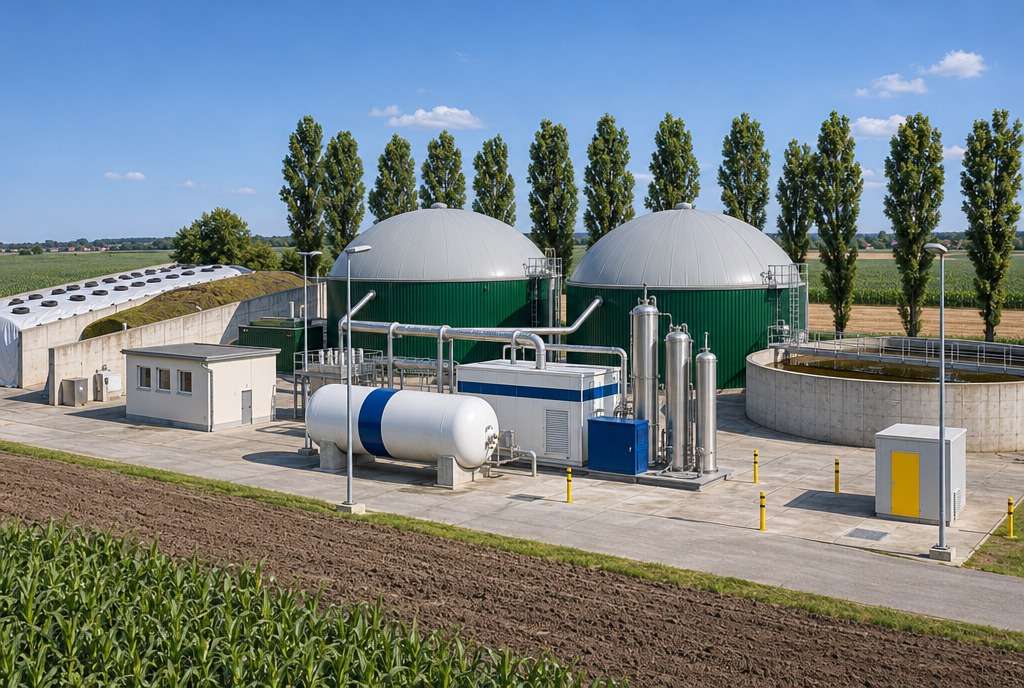
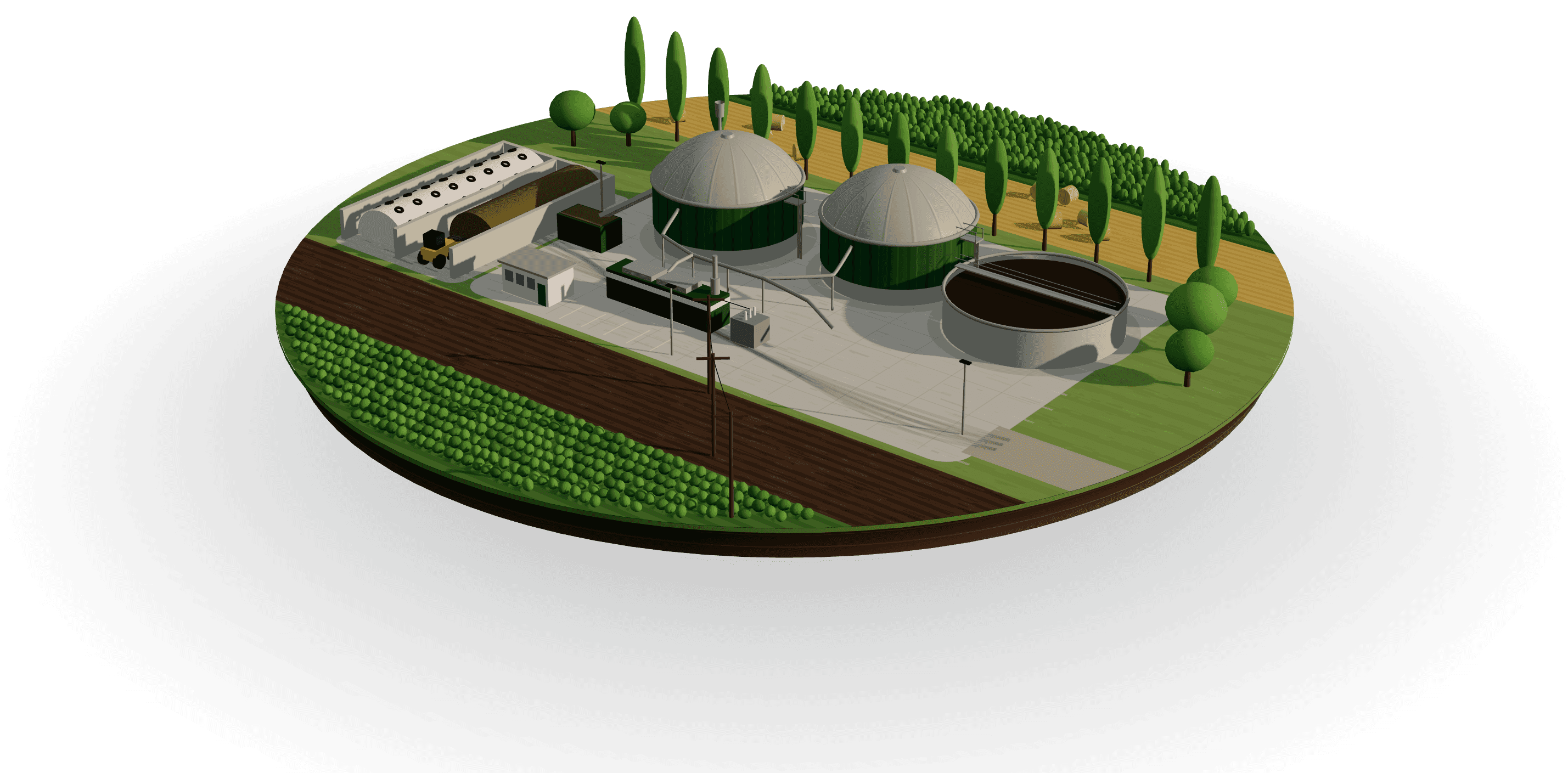
3D model of a biogas plant among fields: silage clamps, two domed digesters, a combined heat and power unit and a digestate tank

How biogas is madeMembership terms and application

  • 41 plants32 operators in nine counties and the City of Zagreb
  • 54.4 MWtotal capacity
  • ≈ 380,000 MWhof electricity a year

Sources: CBA, based on the 2023 MINGOR list; CBA estimate, 2023 Assembly.

1: Feedstock

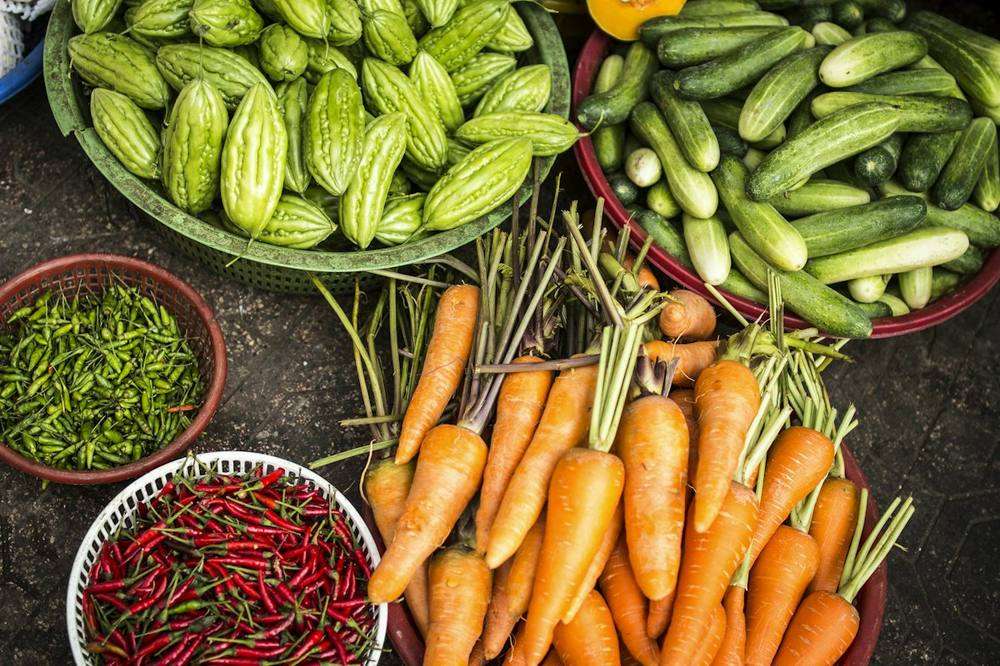
Production starts with delivering and preparing the feedstock: manure and slurry, silage, biowaste and food industry by-products.

Feedstocks are combined: manure provides a stable microbial base, while silage and by-products raise the gas yield. Before the digester they are chopped where needed and mixed in steady proportions, because a sudden change in the ‘diet’ upsets the bacteria.

Most common
manure and maize silage
Where
mostly in Slavonia and Baranja, next to farms
Hygienisation
slaughterhouse by-products and some biowaste
2: Digester

In a closed, heated tank, bacteria break down organic matter without oxygen. This process is called anaerobic digestion.

It runs in four steps carried out by different microorganisms: hydrolysis, acidogenesis, acetogenesis and methanogenesis. Mixers keep the mass even, and a double membrane dome holds the gas.

Temperature
38–42 °C
Duration
several weeks
Products
biogas and digestate

3: Biogas

Biogas is a mixture of methane and carbon dioxide, with water vapour and trace gases such as hydrogen sulphide.

Before use it is cleaned of hydrogen sulphide, which is toxic and corrosive, and dried. In a closed plant the methane is captured and used as fuel instead of escaping into the air from open lagoons.

Methane
50–65%
Energy
about 6 kWh per cubic metre
Methane’s effect
about 28 times as strong a greenhouse gas as carbon dioxide (over 100 years)

4a: Combined heat and power

The biogas burns in a gas engine that drives a generator, producing electricity and heat at the same time.

The electricity goes into the grid, and the heat warms the digester, farms, greenhouses, dryers or nearby villages. The plant runs day and night, whatever the sun and wind are doing, and a flare burns the gas when the engine is off.

Electricity
about 40% of the gas energy
Heat
roughly the same again
Overall efficiency
80–90% when the heat is used

4b: Biomethane

Removing the carbon dioxide turns biogas into biomethane, of natural gas quality.

It is injected into the gas grid, compressed into bioCNG for vehicles or liquefied into bioLNG for lorries and ships. The same plants and feedstock can produce it once an upgrading unit is added.

Methane
95% or more
bioLNG
liquefied at about −162 °C
EU target
35 billion m³ a year by 2030

All about biomethane

5: Digestate

What remains, the digestate, keeps almost all the nutrients from the feedstock.

It is stored in closed tanks and returned to the fields as a fertiliser that crops take up more easily and that smells much less than fresh manure. This closes the nutrient cycle and reduces the need for mineral fertilisers.

Nutrients
nitrogen, phosphorus and potassium
Liquid part
more nitrogen, easier to spread
Solid part
more phosphorus and organic matter

Who we are for

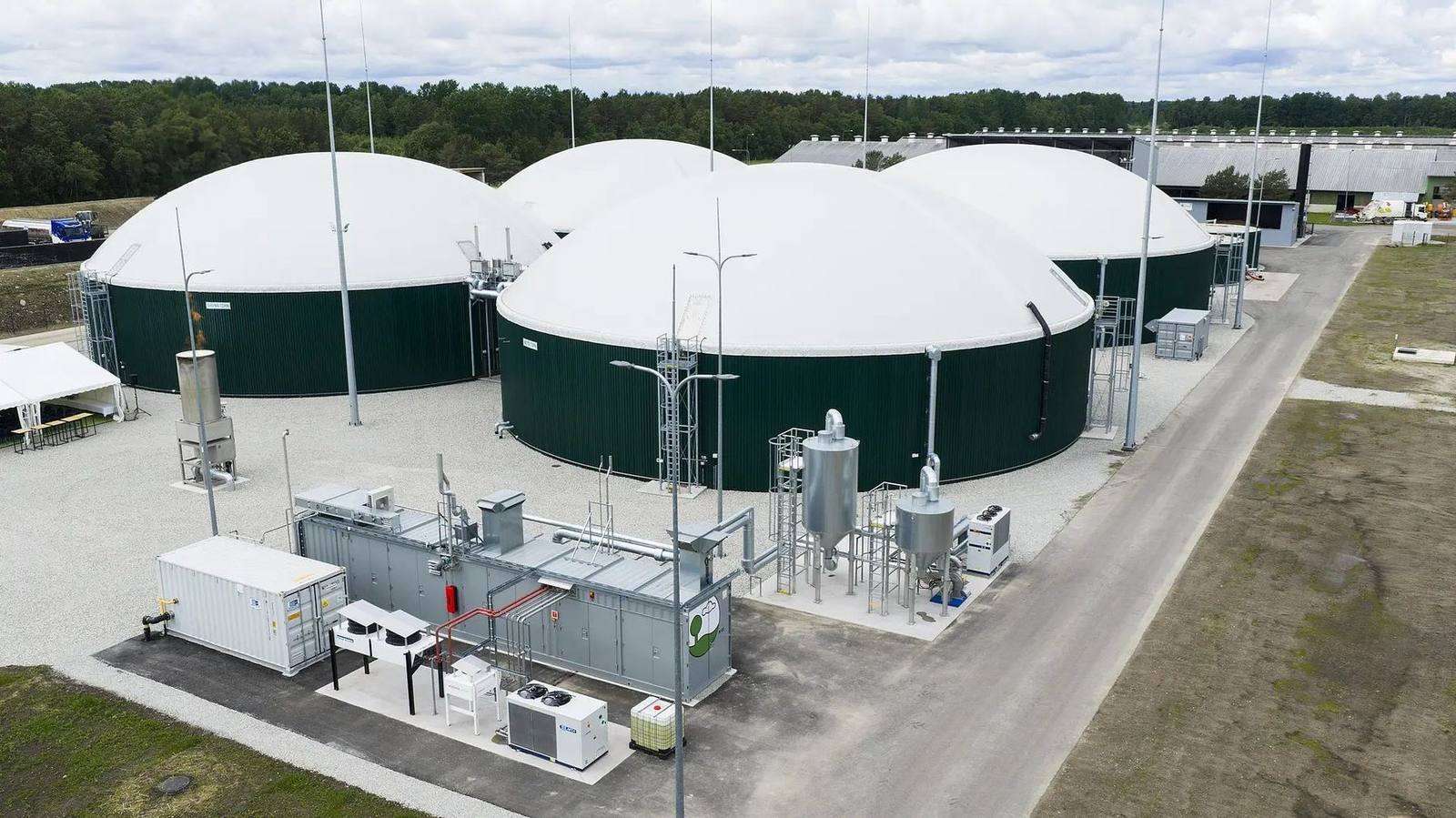
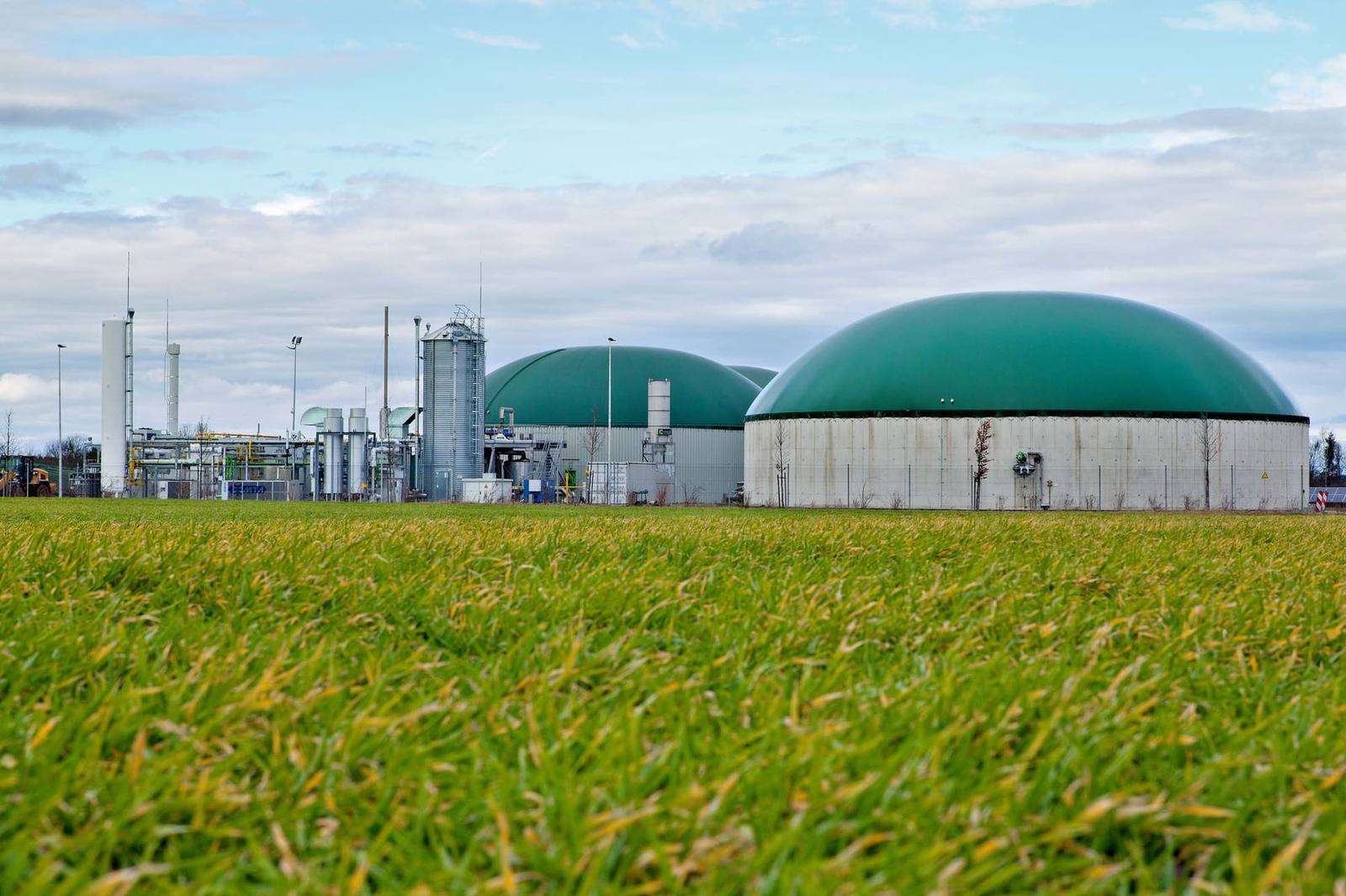
A biogas plant with green domes behind a green field

Current initiatives

The topics on which the association currently works most with institutions and members. All activities

Events calendar

Assemblies, training, professional events and plant visits. You can add any event to your own calendar.

No actual events have been published yet. These are examples for 2027.

All eventsDownload the calendar (iCal)

February 2027

February 2027
MondayTuesdayWednesdayThursdayFridaySaturdaySunday
1234567
891011121314
15161718192021
22232425262728
  1. 10:00

    CBA electoral assembly

    ExampleAssembliesGudovac, fairground

  2. 11:00–12:30

    Webinar: the market premium and the new incentive model

    ExampleTrainingOnline

  3. 9:00–14:00

    Workshop: digestate as fertiliser

    ExampleTrainingOsijek

Plants in the table

Map of counties with the number of plants in the table
Dark areas: number of plants in the table. Pale counties have no plants in the table. © EuroGeographics for the administrative boundaries.

Capacity by county

CountyPlantsCapacity (MW)
Osijek-Baranja1621.14
Vukovar-Srijem68.88
Bjelovar-Bilogora66.28
Zagreb County25.92
Virovitica-Podravina34.22
Koprivnica-Križevci33.90
Požega-Slavonia12.00
City of Zagreb11.13
Varaždin County20.84
Međimurje10.11
Plants in the CBA table
PlantOperatorCountyCapacity
Postrojenje za proizvodnju bioplina i el. energijeAgroproteinka-Energija d.o.o.City of Zagreb1.13 MW
BPE BioelBioel d.o.o.Bjelovar-Bilogora1.07 MW
Bioplinsko postrojenje KlisaBioenergija Klisa d.o.o.Osijek-Baranja1.50 MW
Bioplinsko postrojenje SlatinaBiointegra d.o.o.Virovitica-Podravina2.17 MW
Bioplinska elektrana GunjaBionardo Gunja d.o.o.Vukovar-Srijem1.00 MW
Bioplinsko postrojenje GudovacBioplin Gudovac d.o.o.Bjelovar-Bilogora1.00 MW
Bioplinsko postrojenje Slatina 1 MWBioplin Proizvodnja d.o.o.Virovitica-Podravina1.05 MW
BP GregurovecBioplinara Organica Kalnik 1 d.o.o.Koprivnica-Križevci2.10 MW
Bioplin RovišćeBioplin-Maks d.o.o.Bjelovar-Bilogora1.00 MW
Bioplinska elektrana OrehovecBioplinska Elektrana Orehovec d.o.o.Koprivnica-Križevci1.05 MW
Bioplinsko postrojenje Ivankovo 2Bovis d.o.o.Vukovar-Srijem1.06 MW
Elektrana na bioplin Crnac 1BR Bioplin Crnac 1 d.o.o.Virovitica-Podravina1.00 MW
Bioplinsko postrojenje ClipBioPlusClip Bio Plus d.o.o.Varaždin County0.59 MW
Bioplinsko postrojenje PisarovinaEco-Biogas d.o.o.Zagreb County3.54 MW
Bioelektrana-energana Eko Kotor 1Eko Kotor d.o.o.Međimurje0.11 MW
Bioplinsko postrojenje CernaEnergana Cerna d.o.o.Vukovar-Srijem1.00 MW
Bioplinsko postrojenje GradecEnergija Gradec d.o.o.Zagreb County2.38 MW
Bioplinsko postrojenje MitrovacEnergija Gradec d.o.o.Osijek-Baranja2.38 MW
Bioplinsko postrojenje PopovacEnergija Gradec d.o.o.Osijek-Baranja2.38 MW
Bioplinsko postrojenje OvčaraEnergija Gradec d.o.o.Vukovar-Srijem2.38 MW
Bioplinsko postrojenje VinkaEnergija Gradec d.o.o.Vukovar-Srijem2.38 MW
Bioplinsko postrojenje Mala Branjevina 2Farma muznih krava Mala Branjevina d.o.o.Osijek-Baranja1.09 MW
Bioplinsko postrojenje OrlovnjakFarma muznih krava Orlovnjak d.o.o.Osijek-Baranja1.78 MW
Bioplinsko postrojenje Tomašanci 2Farma Tomašanci d.o.o.Osijek-Baranja1.06 MW
Landia – GradinaLandia d.o.o.Vukovar-Srijem1.06 MW
Elektrana na bioplin MatvejMatvej d.o.o.Koprivnica-Križevci0.75 MW
Bioplin KućanciMiagro Energo d.o.o.Osijek-Baranja0.55 MW
Bioplinsko postrojenje VladislavciMICO d.o.o.Osijek-Baranja0.37 MW
Bioplinsko postrojenje BojanaMoslavina Proizvodi d.o.o.Bjelovar-Bilogora1.07 MW
Bioplinsko postrojenje Bojana 2Moslavina Proizvodi d.o.o.Bjelovar-Bilogora1.07 MW
Bioplinsko postrojenje Mala Branjevina 1Novi Agrar d.o.o.Osijek-Baranja1.09 MW
Bioplinsko postrojenje TomašanciOsatina Grupa d.o.o.Osijek-Baranja1.06 MW
Bioplinsko postrojenje SlašćakOsatina Grupa d.o.o.Osijek-Baranja1.06 MW
Bioplinsko postrojenje Slašćak 2Osatina Grupa d.o.o.Osijek-Baranja1.06 MW
Bioplin IvankovoOsatina Grupa d.o.o.Osijek-Baranja1.06 MW
Bioplinsko postrojenje OsilovacOsilovac d.o.o.Osijek-Baranja2.60 MW
Bioplinsko postrojenje GajPMA Gaj d.o.o.Požega-Slavonia2.00 MW
Bioplinsko postrojenje HercegovacSLK Projekt d.o.o.Bjelovar-Bilogora1.07 MW
Bio postrojenje Donji MiholjacVDM Energija d.o.o.Osijek-Baranja1.05 MW
Bio postrojenje ViljevoVDM Energija d.o.o.Osijek-Baranja1.05 MW
Bioplinsko postrojenje VrčekVrček, obrtVaraždin County0.25 MW

Operators and their plants

Frequently asked questions

Does a biogas plant smell?

Digestion takes place in closed tanks. Odour can occur when feedstock is delivered and stored, but a well-run plant keeps it under control. Digestate usually smells less than untreated manure.

Is biogas safe?

Plants operate in accordance with fire and explosion protection regulations, under constant supervision and with a flare that safely burns off surplus gas.

How much energy does a 1 MW plant produce?

Depending on operating hours, about 7,000–8,000 MWh of electricity a year, plus heat that can be used for heating and drying.

Does biogas compete with food production?

The association encourages the use of manure, waste, by-products and catch crops to keep the share of purpose-grown crops as low as possible.

What is digestate?

The residue left after anaerobic digestion. It is rich in nutrients and is used as fertiliser on farmland, in line with the regulations on fertilisation.

Membership

Membership is open to biogas producers, project developers and everyone working in the sector.

Membership terms and application
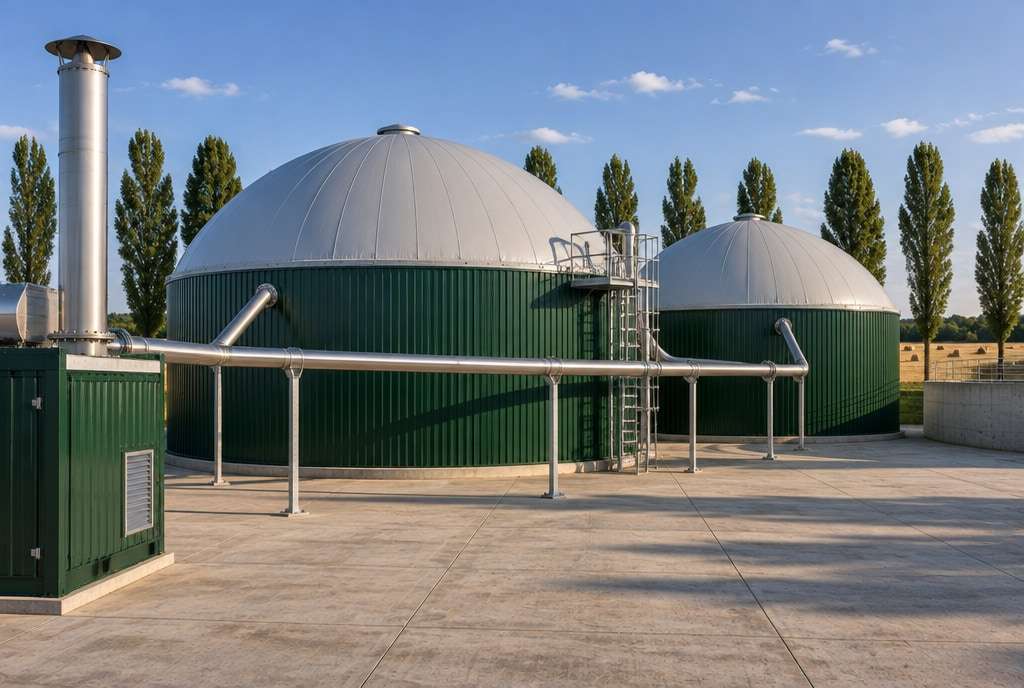
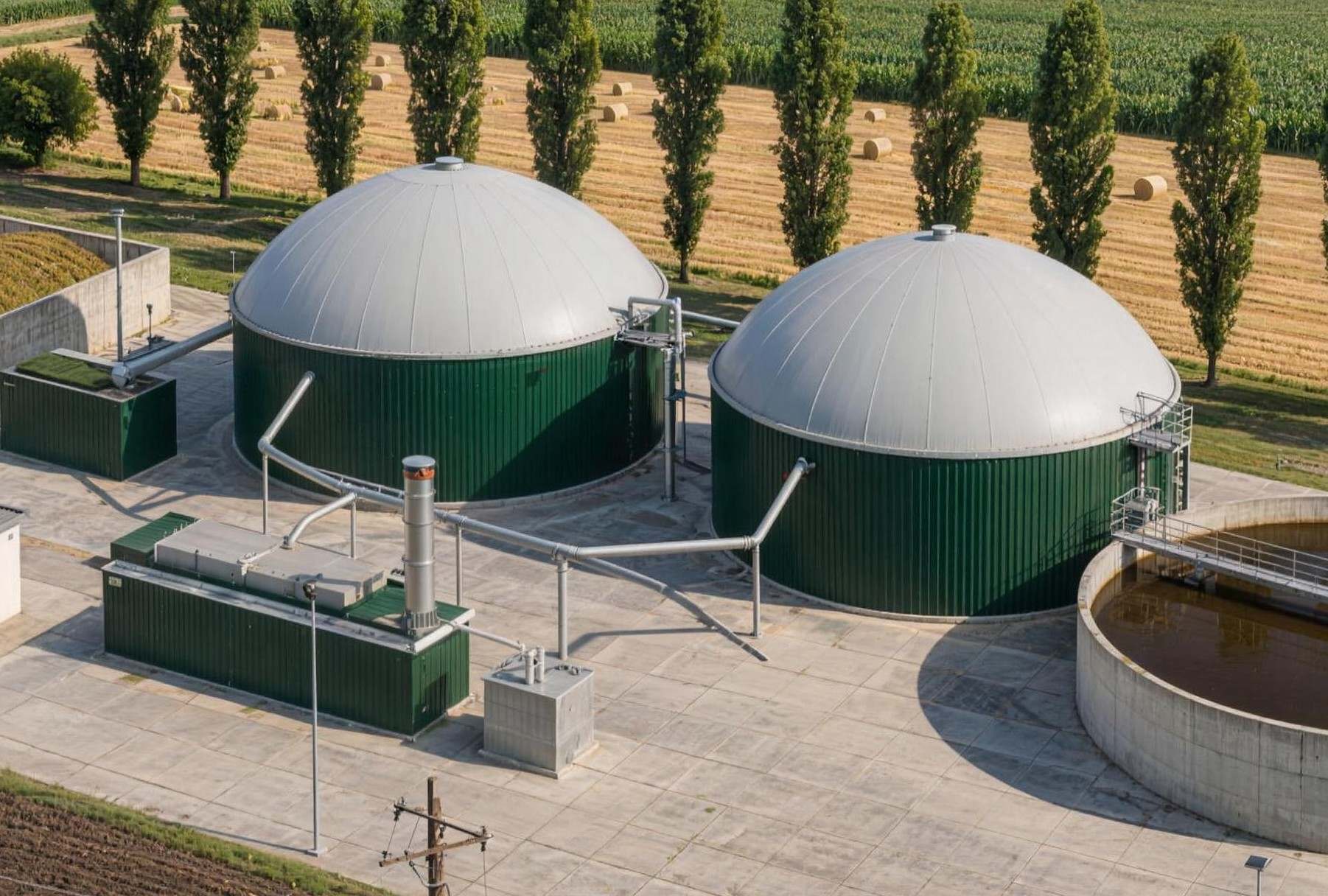
Two digesters with green cladding and grey domes, gas pipes and the combined heat and power unit, seen from the air